


Diabetes mellitus is a chronic multisystem disease in which all types of metabolism are disrupted.It is characterized by impaired insulin secretion or action, accumulation of glucose in the blood (hyperglycemia), urine (glucosuria) and the development of complications.
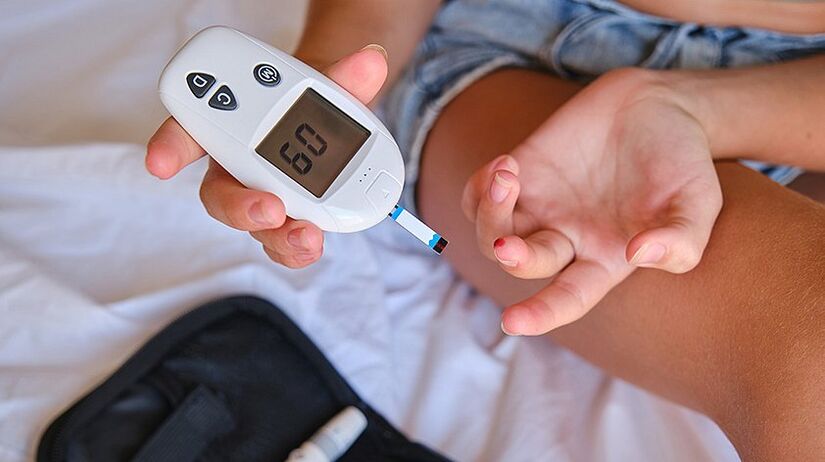
The modern clinic employs endocrinologists with many years of experience in the field of endocrinology.Doctors will be able to accurately determine the level of compensation for diabetes, identify existing complications and prescribe or adjust a treatment program.
How does glucose metabolism usually take place?
Glucose is the main source of energy in the body.It enters the body with food, mainly carbohydrates or is synthesized through a series of metabolic reactions from fats and proteins.Excess glucose accumulates in the liver and muscles as glycogen and is used when needed.
All tissues in the human body are divided into insulin-dependent (muscle, adipose tissue, cardiomyocytes) and insulin-independent (brain, red blood cells, cornea, liver, kidney).In order for glucose to enter the cells of insulin-dependent tissues and be used in cellular metabolism, insulin is required.It is produced in the β cells of the pancreas.Insulin acts like a key that opens the lock for glucose to enter cells.Non-insulin-dependent tissues receive glucose by simple, passive diffusion.
When everything in the body is working normally, glucose enters insulin-dependent tissues smoothly and without problems.When insulin production is disrupted (for example, when the pancreas is damaged) or its mechanism of action on cells is disrupted (cell “lock” is broken), glucose begins to accumulate in the body and cellular starvation develops in the cells.
Below we will look at what happens when glucose builds up in the body and the different types of diabetes.
Classify
Experts distinguish several main types of diabetes.We will focus on the four most common:
- Type I (old name: insulin-dependent);
- Type II (old name: non-insulin dependent);
- Pregnant;
- There are symptoms.
Let's look at each type in more detail.
Type I diabetes
This type of diabetes develops due to damage to the β-cells of the pancreas, the source of insulin in the body, leading to absolute insulin deficiency.One of the common causes of cell damage is the development of autoimmune processes, when pancreatic cells begin to be considered foreign by the body.Antibodies build up against them, completely destroying the insulin source.
Other causes of pancreatic beta cell destruction:
- effects of chemicals (nitrosamines, pesticides, some drugs);
- infectious lesions (measles, rubella virus, cytomegalovirus);
The disease develops when more than 80% of cells are destroyed.
Type I diabetes is common in young people and often appears in childhood, in an acute form, with rapidly increasing clinical symptoms.
Type II diabetes
Type II diabetes (old name: insulin-independent) develops due to a violation of the receptor apparatus of cells, as a result of which insulin resistance is formed in the body.
With this type of diabetes, insulin is produced in the required amount but insulin-dependent cells stop responding to it.Relative insulin deficiency leads to reduced glucose utilization in muscle and adipose tissue, contributing to hyperglycemia.
Causes of type II diabetes are:
- genetic predisposition;
- malnutrition, obesity;
- physical inactivity;
- chronic stress condition.
Table 1. Comparative characteristics of type I and type II diabetes.
| Sign |
Type I |
Type II |
| Prevalence rate |
15% |
85% |
| Onset of disease |
Most often in childhood or adolescence |
Middle age and old age |
| acute |
Long-term progress |
|
| Development of symptoms |
Fast |
Slow |
| Phenotype (appearance) |
Thin |
Obesity |
| Insulin levels |
Lack |
increase |
| Insulin resistance |
- |
+ |
| Insulin deficiency |
absolute |
relative |
| ketoacidosis |
+ |
- |
Pregnancy (diabetes during pregnancy)
Physiological pregnancy is characterized by two significant changes in glucose metabolism:
- Provides continuous glucose to the placenta and fetus.During pregnancy, due to increased glucose consumption, the amount of glucose in the body decreases faster than in non-pregnant women.
- Reduced tissue sensitivity to insulin during the second trimester of pregnancy, leading to the formation of insulin resistance.
This condition is caused by an excess of hormones: progesterone, cortisol, prolactin that have anti-endocrine effects (block the effect of insulin).This reduces the sensitivity of fat tissue and muscle to insulin.
Physiological pregnancy is characterized by both insulin resistance and a compensatory increase in pancreatic β-cell activity, which helps maintain optimal glucose metabolism.In women with impaired glucose tolerance, the compensatory ability of β cells is insufficient, leading to the formation of hyperglycemia.
Diagnosis of gestational diabetes
To reduce the risk of complications for both mother and fetus, it is necessary to accurately diagnose and treat gestational diabetes.
Diagnosis is carried out in 2 stages:
- The first stage is performed when the pregnant woman first visits the doctor before 24 weeks of pregnancy.A woman undergoes one of the tests: intravenous blood donation on an empty stomach, glucose tolerance test or determination of glycated hemoglobin HbA1c.
- The second stage is performed in pregnant women whose carbohydrate metabolism disorders have not been identified in the early stages.Diabetes mellitus is diagnosed by performing a glucose tolerance test with 75 g of glucose between 24 and 28 weeks of pregnancy.
Chỉ tiêu đường huyết lúc đói ở phụ nữ mang thai là dưới 5,1 mmol/l. Sau một giờ, trong quá trình kiểm tra dung nạp glucose đường uống, các giá trị quy chuẩn nhỏ hơn <10,0 mmol/L và sau 2 giờ là trên 7,8 mmol/L và dưới 8,5 mmol/L.
Pathological indicators of venous blood sugar are the following values:
- on an empty stomach more than 7.0 mmol/l;
- glycated hemoglobin (HbA1) above 6.5%;
- glucose value greater than 11.1 mmol/l (time of day and last meal are not important).
These cases indicate gestational diabetes and require immediate insulin treatment.
Elevated fasting values do not correspond to the parameters of diabetic manifestations - above 5.1 mmol/l but below 7.0 mmol/l, placing pregnant women in a group at higher risk of developing diabetes.Such women should undergo reasonable dietary therapy, actively control blood sugar levels and the condition of the fetus.
Diabetes has symptoms
This type is secondary and is caused by impaired glucose metabolism due to various diseases or medications.These conditions include:
- diseases of the exocrine pancreas (pancreatitis, cancer, cystic fibrosis);
- Diabetes mellitus using medication - when using glucocorticosteroids (have an insulin-resistant effect, reducing insulin production in the body), phenytoin, estrogen (birth control pills).
Symptomatic diabetes can often be treated by addressing the underlying cause of the diabetes (for example, changing or stopping medication).
Why is hyperglycemia bad?
We have discovered that insulin deficiency or dysfunction leads to the accumulation of glucose in the blood.When the renal threshold is reached (>8.8 mmol/l - the value at which the kidneys begin to transfer glucose during dialysis), glycosuria will develop.Glucose is an osmotically active substance so it binds with water and leads to polyuria, the body loses a large amount of water and activates thirst center compensation.
Polyuria (excretion of large amounts of urine in large quantities) leads to dehydration in the body, decreased blood volume, decreased blood pressure and hypoxia in tissues located on the periphery.This carries the risk of thromboembolism and development of disseminated intravascular coagulation syndrome.
In addition, the pressure drop is less than 50mm.rt.Art.leads to slowed blood flow to the kidneys, leading to anuria (lack of urination) and the development of acute kidney failure.
There is a peculiarity in the pathogenesis of type I diabetes - absolute insulin deficiency leads to activation of insulin antagonist hormones: T4, adrenaline, cortisol, somatotropic hormone, glucagon.
The following hormones enhance all types of metabolism, leading to a greater increase in glucose levels:
Lipolysis is the destruction of fats, leading to the formation of large amounts of free fatty acids (FFA) and from them - glucose.
FFA are an alternative energy source in the body, underlying the formation of ketone bodies (e.g. acetone).An increase in ketones in the blood and urine causes vomiting, metabolic acidosis (lower blood pH), and compensatory hyperventilation of the lungs (deep, noisy, acidic Kussmaul breathing occurs).The accumulation of ketones leads to one of the serious complications - ketoacidotic coma.
- Gluconeogenesis is a metabolic pathway in which glucose is synthesized from non-carbohydrate sources (amino acids, fatty acids).
- Glycogenolysis is the process of breaking down glycogen (glucose storage in the liver).
Symptom
We have mentioned the main connections in the pathogenesis of diabetes mellitus, now we will outline the clinical symptoms that may suggest this disease:
- thirst (polydipsia) - associated with dehydration of the body;
- frequent urination (polyuria) - occurs because glucose is osmotically active and binds water;
- increased appetite - occurs due to the fact that glucose does not enter the cells, forming a state of energy starvation in them;
- dry skin, peeling, itching - these symptoms appear due to dehydration and dysfunction of sweat and sebaceous glands;
- pustular skin disease - occurs due to reduced body resistance;
- weakness, depressed mood.
Early complications
Early complications are acute conditions characterized by a rapid increase in clinical symptoms and require immediate medical intervention from a physician.
Early complications of type I diabetes
- Ketoacidotic coma is observed more often in the first type of diabetes mellitus.It is characterized by a sharp "fruity" odor from the mouth, impaired consciousness, weakened reflexes, diarrhea, nausea and respiratory Kussmaul ketoacidosis.
Other complications are also characterized by impaired consciousness, reflexes and decreased blood pressure:
- hyperosmolar coma
- Lactic acid coma
- hypoglycemic coma
Differential diagnosis of the type of coma is carried out using biochemical analysis of blood, urine and acid-base state of the blood.
Early complications of type II diabetes
- Hyperosmolar coma - observed more frequently
- Lactic acid coma
- hypoglycemic coma
Late complications
These include:
- microvascular disease: retinopathy, kidney disease;
- Large vessel disease: coronary heart disease, angina, atherosclerosis, hypertension, chronic cerebral ischemia, acute stroke;
- neurological diseases (polyradiculoneuropathy, radiculopathy, lumbar plexus disease);
- sorbitol deposition in tissues (cataract);
- immunodeficiency: pustular disease, prolonged tissue healing process);
- diabetic foot - pathological changes in the peripheral nervous system, arterial beds and microcirculation, bone and joint apparatus of the foot with the development of ulcerative-necrotic and necrotic processes.
Mechanism of late complications
Late complications of diabetes are mainly related to blood vessel damage.Their main mechanism is glycosylation of all protein structures of the body (vascular endothelium, basement membrane, vessels of nerve endings).
Glycosylated proteins:
- increases the permeability of vascular walls and disrupts the rheological properties of blood, causing the development of thrombosis;
- promotes the production of inflammatory factors that damage small capillaries;
- block vasodilation;
- increased lipid peroxidation, leading to the production of reactive oxygen species that cause tissue damage;
- contributes to the development of endothelial dysfunction and increases the risk of atherosclerosis.
As a result of these processes, the walls of small vessels become hard, less elastic and susceptible to rupture.The speed of blood circulation in small vessels slows down and blood viscosity increases.
Cataracts
Cataracts are one of the common late complications of diabetes.
It is formed as a result of excess glucose entering alternative metabolic pathways.One of these pathways is the polyol oxidation pathway to sorbitol.Sorbitol is a compound that increases osmotic pressure in the eye chamber and causes cataracts.
Diabetic glomerulosclerosis
This kidney disease is accompanied by changes in the morphology of the capillaries and arterioles of the glomerulus, leading to closure (obstruction), sclerotic changes, gradual decrease in the filtering function of the kidneys and the development of chronic renal failure.
Diabetic neuropathy and retinopathy
Diabetic neuropathy is characterized by damage to the central and peripheral nervous systems, clinically manifested by impaired sensitivity.
Diabetic retinopathy is characterized by damage to the capillaries, arterioles and veins of the retina with the development of microaneurysms, hemorrhages, exudate changes and the appearance of newly formed blood vessels.
Diabetes treatment
Type 1 diabetes is treated with insulin.Insulin, based on duration of action, is divided into:
- Extremely short-acting - take before each meal.Onset of effect 5-15 minutes, lasting 2-5 hours;
- Short-acting - take before each meal.Starts action after 30 minutes and lasts for 5-8 hours;
- Average duration of action - begins to act after 1-2 hours, duration of action is 18-24 hours.Necessary for the emergence of basic energy processes;
- long-lasting effect - begins to act after 1-2 hours, lasts 18-36 hours.Necessary for the occurrence of basic energy processes.
Doctors treat type II diabetes in three stages.
Treatment phase 1:
- in people with normal body weight - dietary therapy (limitation of foods rich in carbohydrates);
- For people with excess body weight, bariatric therapy is carried out: more aggressive dietary therapy (strict restriction of total calories in food, carbohydrates and animal fats), regular physical activity (therapy), lifestyle changes, which imply increased physical activity at home and in free time.
Phase 2 of treatment:
- the use of β-cell stimulating drugs: sulfonylurea derivatives, biguanides;
- the use of drugs that increase the sensitivity of insulin receptors in muscle and adipose tissue: thiazolidinediones.
Phase 3 of treatment: insulin therapy.
Principles of treatment in emergencies
Ketoacidosis coma:
- insulin and glucose replacement therapy;
- Restores fluid volume, electrolytes and blood pH.
Hyperosmolar coma:
- restore fluid volume and osmolality using hypotensive sodium chloride solution (0.45%) (2-3 liters);
- Use electrolytes with short-acting insulin preparations in small doses (5-10 U/hour).
Advantages of treatment at the clinic
- Doctors will conduct a thorough diagnosis of the body for the presence of diabetes and its complications for treatment.
- We will choose an individual treatment program based on the latest clinical recommendations and your doctor's many years of clinical experience.
- Doctors will advise patients in detail about the recommendations and rules that people with diabetes should follow.